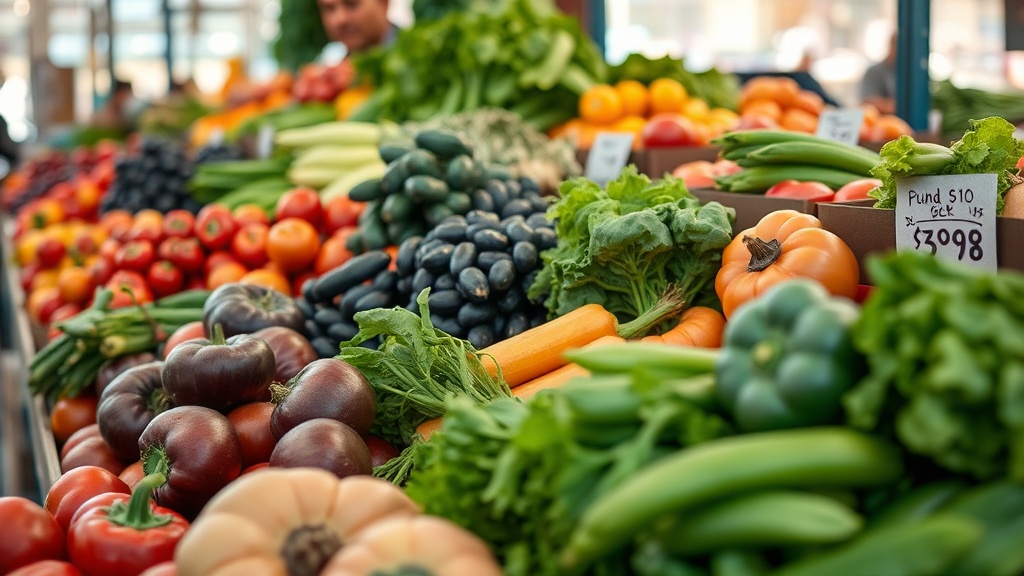
Pick the best local seasonal produce at the market

You’re standing at a stall near the entrance of a local market in the North Shore area, staring at a pile of heirloom tomatoes. One looks perfectly red but feels soft, while another is slightly firm but has a weird bruise. You want to know which one actually tastes like summer and which one will rot on your counter by Tuesday. This guide covers how to identify peak ripeness, what to look for in seasonal Quebec produce, and how to avoid wasting money on subpar vegetables.
Buying local isn't just about supporting the farmer down the road from Boisbriand—it's about getting better flavor. When you buy produce that traveled 5,000 kilometers in a refrigerated truck, you're eating something that was picked under suboptimal conditions. Local seasonal eating changes the game for your kitchen.
How do I know when seasonal vegetables are actually ripe?
The simplest way to tell if a vegetable is ripe is to use your senses—smell, touch, and sight—rather than just looking at the color. A common mistake is assuming a bright color means high quality. Sometimes, a deep color is just a sign of heavy pigmentation, not actual sweetness or maturity.
For example, if you're picking up corn (maize) at a market near Saint-Eustache, don't just look for yellow kernels. Gently peel back a husk and check the silk; the silk should be dark and slightly withered. If the silk is bright and fresh, the corn might be underripe. Also, check the weight. A heavy ear of corn means it's full of moisture and starch, which translates to better texture once you boil it.
Here are a few quick checks for common Quebec seasonal staples:
- Root Vegetables (Carrots, Beets, Radishes): Look for firm tops. If the greens are wilted or yellow, the root has likely been sitting too long and might be woody.
- Leafy Greens: Avoid anything with "slimy" patches or dark, translucent spots. The leaves should be crisp and stand up on their own.
- Stone Fruits (Peaches, Plums): Give them a very gentle squeeze. They should give slightly under pressure but shouldn't feel mushy. If they feel like a rock, they aren't ready.
- Squash: A heavy squash with a hard, matte skin is usually a winner. If the skin is shiny, it might be too young or starting to degrade.
If you want to dive deeper into the science of plant maturity, the Wikipedia page on ripening offers a great breakdown of how ethylene gas affects different types of produce.
What is the best way to store local produce?
The best way to store your produce is to separate items based on their temperature needs and ethylene production. Some fruits release gas that makes everything around them rot faster, while others need a cold, damp environment to stay fresh.
I've seen too many people throw a bag of ripe peaches right next to a head of lettuce in the fridge. Within two days, that lettuce is a puddle of green slime. It's a waste of money—and honestly, it's frustrating. You need to treat your fridge like a strategic storage zone.
Here is a quick reference guide for your kitchen:
| Produce Type | Storage Method | Shelf Life Tip |
|---|---|---|
| Leafy Greens | Crisper drawer with a paper towel | Keep moisture high but avoid direct water contact. |
| Berries | Refrigerated in a breathable container | Don't wash them until right before you eat them. |
| Potatoes/Onions | Cool, dark pantry (separate them!) | Onions make potatoes sprout faster. Keep them apart. |
| Hard Squash | Countertop or cool pantry | Can last months if kept in a dry, dark spot. |
A quick tip: if you buy a lot of berries at the market, try a quick soak in a mixture of water and a little white vinegar. This helps kill mold spores. Just make sure they are completely dry before you put them back in the fridge.
How much should I expect to pay for local produce?
Prices for local produce fluctuate based on the season, weather patterns in Quebec, and current demand. You'll notice that prices are often higher for highly perishable items like berries or soft greens compared to hardy root vegetables.
Don't be shocked if the price of strawberries seems high in early June compared to July. That's just the reality of the growing cycle. However, you can often find better deals by buying "seconds" or "ugly" produce. Many farmers sell slightly bruised or oddly shaped vegetables at a discount. They taste exactly the same—they just don't look "Instagram-perfect."
It's also worth noting that buying in bulk during peak season is a smart move. If you see a massive sale on local cucumbers or zucchini, buy more and preserve them. You can pickle them, freeze them, or make relishes. This is a great way to extend the flavor of the season into the winter months.
For official statistics on agricultural trends and pricing in Canada, you can check the Government of Canada's agriculture website. It provides a broader look at how the industry operates.
The "Scent Test" for Quality
If you're ever in doubt, use your nose. This is the most reliable way to judge many fruits and herbs. A melon should smell sweet and fragrant at the stem end. A cucumber should smell fresh and "green," not bitter or musty. If a herb like basil has lost its scent, it's likely lost its essential oils and won't provide much flavor to your pasta sauce.
Sometimes, the visual cues are deceptive. I once bought a bunch of cilantro that looked incredibly vibrant and green, but it had zero scent. It was essentially flavorless. Always give your herbs a quick sniff before you pay.
Watch Out for "Hidden" Damage
When you're picking out items like bell peppers or cucumbers, look at the stem end. If the stem area is sunken or looks soft, the vegetable is likely old. You want a stem that looks relatively fresh or at least well-integrated into the body of the vegetable.
Also, check the bottom of the produce. For items like melons or heavy squash, a dark or soft spot on the bottom can indicate rot that has started from the inside. This is especially common if the produce has been sitting in a damp crate for a few days.
One more thing—don't be afraid to ask the farmer. Most people working at the local markets around the North Shore are incredibly knowledgeable. If you're unsure if a certain variety of tomato is ready to eat, just ask. They'd much rather help you find a good product than have you come back complaining about a bad one.
If you're looking for specific recipes to use up your seasonal haul, the Bon Appétit website is a goldmine for techniques on how to handle different types of vegetables and fruits.
When you shop local, you aren't just buying food. You're participating in a cycle that keeps our local economy moving. It's a small way to stay connected to the land and the seasons that define our region.
Steps
- 1
Check the seasonality
- 2
Inspect texture and weight
- 3
Smell for natural aroma
- 4
Ask the vendor about harvest dates